

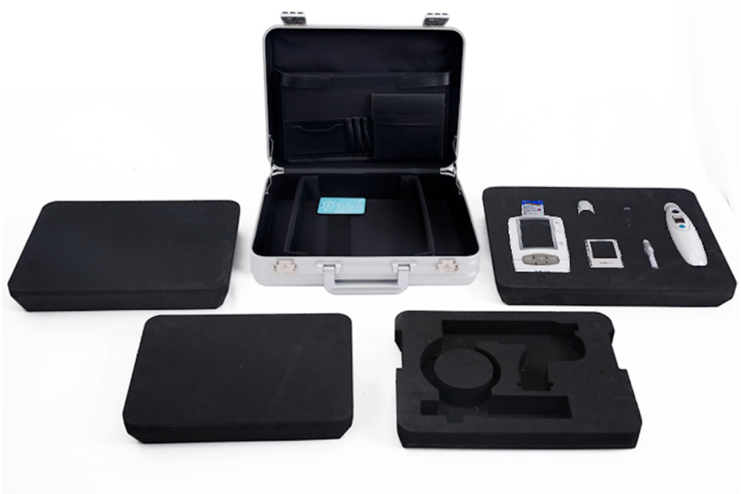
MSAC Co., Ltd. is proudly rooted in Foshan, where we design and manufacture aluminum carry cases in a range of styles. Our aim isn’t just to build durable boxes; it’s to help you protect your gear and simplify your routine. The future is smart, and that means adding features that help you find, manage, and secure what you carry. In this post, we explore three practical, easy-to-use smart features—RFID, QR codes, and GPS tracking—and show how they can be integrated into aluminum carry cases. You’ll see how these tools can benefit professionals with valuable equipment and everyday travelers alike, through relatable stories and clear guidance on implementation.
RFID: The Future of Case Tracking on the Move How RFID Works
- RFID (Radio Frequency Identification) uses tiny tags that can be read by a nearby reader without touching the item. There are two main types: passive tags (no battery) that draw power from the reader, and active tags (battery-powered) that broadcast their presence more actively.
- When read, an RFID tag can reveal a unique ID and, in some configurations, a snapshot of what’s inside the case or environmental data such as temperature.
- Tags can be embedded in case components or placed on interior straps, giving you a discreet yet reliable data layer that travels with the case.
Practical Benefits for Pros
- Faster turnarounds at checkpoints and in studios. A quick scan identifies the case in a line of gear without opening it.
- Precise asset management. A central system can show whether a case is in use, in transit, or due for service, reducing loss and misplacement.
- Enhanced security and accountability. RFID status can signal access rights or alert supervisors if a case leaves a designated area.
- Seamless workflow integration. RFID data can sync with existing inventory or project-management tools, giving you a single source of truth.
Implementation Tips
- Decide between passive and active tags. Passive tags are budget-friendly and durable; active tags offer longer read ranges and real-time updates but at higher cost and maintenance.
- Place tags thoughtfully. A tag near the lid or interior frame is less likely to be damaged and remains readable through normal handling.
- Map tag IDs to your asset records. Build a simple database that links each tag to its contents, owner, and lease or project schedule.
- Ensure durability. Choose IP-rated tags and protective coatings to withstand abrasion, temperature swings, or wet environments.
- Secure data access. Use encryption and access controls so the RFID data stays within your trusted systems and isn’t exposed unintentionally.
QR Codes: Instant Data Access with a Scan How QR Codes Work
- QR codes are two-dimensional barcodes scanned by smartphones or dedicated scanners. A single scan can reveal a contents list, link to a product sheet, or open a dedicated tracking page.
- They’re inexpensive to print or engrave on a surface and can be protected with coatings to withstand handling, weather, and abrasion.
- QR codes can point to static information (a contents list) or dynamic pages that update as items move or are refilled.
Real-World Benefits
- Lightweight and low-cost data access. A quick scan can pull up inventory details, safety data, or maintenance schedules without manual logging.
- Portable, offline-friendly references. Even in a location with limited connectivity, a QR code can link to locally cached data or on-device resources.
- Easy to implement and scale. Add codes to new or existing cases with minimal downtime and vendor cooperation.
Best Practices for QR Codes
- Print quality matters. Use high-contrast codes and durable printing or engraving, then seal with a protective topcoat to resist wear.
- Put codes in visible, consistent locations. A corner on the lid or a dedicated label near the handle makes scanning fast and reliable.
- Link to meaningful data. Use short, stable URLs and consider versioning so that updates don’t break existing scans.
- Include a contents snapshot. A QR code can unlock a dynamic contents page that’s routinely updated as gear is added or removed.
- Plan for accessibility and privacy. If the contents include sensitive equipment, pair QR data with access controls or limited previews to protect privacy.
GPS Tracking: Real-Time Location and Recovery How GPS Tracking Works
- GPS tracking devices are compact modules placed inside the case that determine location via satellite. They typically transmit updates over cellular or WiFi networks to a mobile app or cloud service.
- Location data can be displayed on a map in near real-time, with the option to enable geofences, alerts, and route history.
- Many devices offer long battery life and robust, rugged housings suitable for travel, fieldwork, or demanding environments.
When to Use GPS Tracking
- High-value or mission-critical gear that travels across multiple sites or countries.
- Complex shoots, expeditions, or service calls where knowing the exact location of every case improves efficiency and reduces downtime.
- Shipping or courier operations that require visibility across the entire journey.
Practical Setup and Security
- Power management. Look for devices with long-life batteries, low-power modes, and configurable reporting intervals to balance visibility with battery life.
- Network considerations. Ensure compatibility with existing data plans or WiFi networks, especially in remote areas where cellular coverage may be spotty.
- Privacy and security. Use encrypted data transmission, access controls, and the ability to disable tracking when not needed to protect sensitive information.
- Geofences and alerts. Set up alerts that notify you when a case leaves a defined area or enters a restricted zone, enabling rapid intervention.
Implementation Roadmap: From Idea to Integrated Smart Case
- Define your objectives. Decide which goals RFID, QR codes, and GPS tracking will support—improved asset visibility, faster workflows, or enhanced security.
- Choose the right mix. Not every scenario needs every feature. A compact travel case might benefit from QR and RFID, while a production kit traveling across locations might need GPS plus RFID.
- Plan labeling and tagging. Decide where to place RFID tags and QR code labels for durability and readability. Create a consistent labeling scheme across all cases.
- Build or adapt data workflows. Map each tag ID to an asset record; link QR scans to a contents page; connect GPS data to your fleet or asset management system.
- Prioritize security. Implement encryption, access controls, and data governance policies to protect sensitive information.
- Run a test pilot. Start with a small set of cases to validate reliability, read ranges, and data integration before scaling.
- Roll out and improve. Expand deployment, refine processes based on feedback, and monitor performance with regular checks.
Real-World Scenarios: How These Features Translate to Daily Use
- The documentary shoot. A crew’s camera and lighting cases travel between studios and remote locations. RFID tags let the production team scan in equipment with a single tap, updating a live inventory. QR codes link to reminder checklists for safety and maintenance, while GPS trackers keep tabs on where the most valuable cases are at all times, reducing the risk of loss in busy environments.
- The service technician’s kit. A field technician carries a mix of diagnostic tools in aluminum cases. A QR code on each case opens a contents page with the technician’s manual links and replacement part lists. If a case goes missing at a client site, GPS tracking provides its last known location, expediting recovery.
- The traveling photographer. At airports and events, RFID tags streamline handoffs between team members by letting staff verify each case’s contents quickly. QR codes connect to a live contents sheet that’s updated as gear moves in and out of the bag. GPS adds a layer of security when gear is staged in multiple locations, giving peace of mind during long shoots.
Putting It All Together: Why It Matters for Your Aluminum Cases
- A smarter carry solution isn’t just about gadgets; it’s about reducing friction and risk in daily workflows. RFID, QR codes, and GPS tracking collectively create a data-rich, highly controllable environment for your gear.
- For professionals, this translates to faster setup times, fewer lost items, and easier compliance with safety and asset-management standards. For travelers and hobbyists, it means greater confidence that your gear is where you left it, even when you’re moving between locations or storing gear in shared spaces.
Practical Considerations and Best Practices
- Durability and environment. Aluminum cases can be rugged; choose tags and labels rated for your operating environment (dust, moisture, vibrations) to maintain readability.
- Battery and maintenance. GPS trackers require power; factor battery life into daily routines and plan for charging. Consider devices with replaceable batteries for long-term deployments.
- Data governance. Align RFID and QR code data with your existing asset registers and privacy policies. Regularly audit data accuracy and access controls.
- Cost vs. value. Start with a pilot to measure return on investment before committing to a full rollout. RFID and QR codes can be incremental plus GPS can be added where needed.
Conclusion Smart features like RFID, QR codes, and GPS tracking can elevate aluminum carry cases from simple protective enclosures to smart, responsive partners in your daily work and travel. By choosing the right combination, carefully planning placement, and integrating data into your workflows, you gain faster access to gear, clearer visibility into inventory, and stronger protection against loss. At MSAC Co., Ltd., we’re excited to see how these tools can simplify your life while keeping your equipment safer and easier to manage. The future is smart—and your aluminum cases can be, too.